The fog layer supplies extra computing assets and services to edge units, which allows organizations to process more data in real time. Cloud computing refers to the delivery of on-demand computing assets over the web. It entails centralized information centers that present scalable computing energy, storage, and services to customers on a pay-per-use basis.
Besides, edge computing takes this functionality a notch higher. It processes information immediately on gadgets on the supply, guaranteeing excessive operational pace and efficiency. Fog computing is a decentralized computing infrastructure or process in which computing resources are positioned between an information source and a cloud or one other knowledge center. Fog computing is a paradigm that provides services to user requests on edge networks. Most individuals don’t perceive the distinction between fog computing vs. cloud computing. Cloud computing is the on-demand provision of laptop processing energy, knowledge storage, and applications available over the web.
This makes it extremely secure compared to cloud and fog computing. A key problem in fog computing is reaching environment friendly information evaluation and processing at the edge of a decentralized network. Cloud computing presents challenges in information privacy and safety, as delicate information is transmitted and stored in remote data facilities. Cloud suppliers typically make use of safety measures, corresponding to encryption and access controls, however the data is ultimately entrusted to the cloud provider’s infrastructure. Fog can also embrace cloudlets – small-scale and somewhat powerful data facilities positioned on the community’s edge.
Plus, there is no want to take care of local servers and fear about downtimes – the vendor supports everything for you, saving you money. If you’re in search of one of the best dedicated server provider to increase effectivity, contact RedSwitches at present. We supply a variety of providers at unbeatable prices that can be custom-made in each way to match your wants. Unfortunately, there may be nothing immaculate, and cloud expertise has some downsides, especially for the Internet of Things companies. Find and examine enterprise software insights to increase effectivity, streamline operations, enhance collaboration, cut back costs, and develop your corporation.
It allows users to store, calculate, communicate and course of data by letting them access the entry points of assorted service suppliers. Fog computing is geographically distributed and operates in shut proximity to the information sources and end-users. Fog nodes are positioned at the community edge, similar to IoT gateways, routers, or on-site servers, enabling native processing and instant response. The demand for information is increasing the general networking channels.
Importance Of Cloud Computing For Giant Scale Iot Options
The new know-how is likely to have the greatest impression on the event of IoT, embedded AI and 5G solutions, as they, like never before, demand agility and seamless connections. Scale Computing and G2 collaborate on this infographic to elucidate why organizations seek server virtualization alternatives, and compares Scale Computing Platform and VSphere side-by-side. Fog computing is also capable of providing a better expertise to the end-using with features like instant responses and nil downtime.

When deciding between fog computing and cloud computing for your IoT project, a number of factors must be taken into account. Firstly, contemplate the nature of your utility and the particular requirements it entails. If real-time response and privacy are paramount, fog computing could be the more sensible choice. Conversely, if your project includes extensive knowledge analysis and scalability, cloud computing could additionally be more suitable. Furthermore, the availability of sources, budget constraints, and the extent of management you require over your data ought to be thought-about.
Forms Of Fog Computing
This might help organizations save on bandwidth and storage costs. After going by way of the article totally, you can easily tell the distinction between fog and cloud computing. In cloud computing, end-users experience a fast response time with the help of devoted information centers. In this mannequin, software program and information usually are not stored on a local hard drive.

Cloud computing is designed for massive scalability by adding extra servers and sources to the centralized information centers. Scaling is achieved vertically by increasing the sources within an information heart. Cloud computing allows users to easily scale up or down based on demand. Although these instruments are resource-constrained in comparability with cloud servers, the geological unfold and decentralized nature help provide dependable companies with protection over a wide area. Fog is the physical location of computing devices much nearer to customers than cloud servers.
Cloud Computing: Definition, Advantages, And Limitations
Besides, companies require a bodily area and a technical professional to ensure sufficient power and dealing and administration of the methods. It must be famous that fog networking is not a separate structure. It does not replace cloud computing however enhances it by getting as shut as attainable to the supply of information. In cloud networks, information should travel to the server from one user’s device and again right down to the other customers. However, in fog networks, the information will get processed at a local degree.
- The current developments have altered, and all companies are demonstrating an curiosity in expertise innovation.
- Cloud computing refers to the supply of on-demand computing assets over the web.
- Fog computing can be geographically distributed, however often, it is extra localized and will only operate from one geographic location.
- Before cloud computing, organizations used to retailer and compute the data on hard drives and servers.
- That “narrow set of variations” continues to be enough, nevertheless, to warrant a distinction.
Besides letting folks collaborate and communicate in real time, it additionally offers quick and quick access to knowledge. Whether it’s sending giant files to your mates or working on the same file with your colleagues, flexibility, and comfort are impossible to think about without cloud computing. Before cloud computing, organizations used to store and compute the data on hard drives and servers. However, this practice has its own limitations, corresponding to physical area occupancy, excessive maintenance, and low-cost effectiveness, which is why cloud computing is essential.
Fog Computing Vs Cloud Computing: Key Differences
The main difference – a minimal of as it’s being outlined nowadays – comes from the reality that the cloud exists by way of a centralized system. Whereas in a fog computing surroundings, every thing is decentralized, and every thing connects and reports through a distributed infrastructure mannequin. Connecting your organization to the cloud, you get entry to the above-mentioned providers from any location and through completely different gadgets. Moreover, there is not any want to maintain local servers and worry about downtimes — the vendor helps every little thing for you, saving you money. On the other hand, cloud computing comes with excessive processing capabilities. Hence, it is suitable for giant knowledge analytics and complex modeling.
Cloud is definitely centralized and contains lots of data that could presumably be positioned everywhere in the globe, removed from shopper gadgets. Many tiny nodes are dispersed all through the fog and are located near the consumer units. We are already used to the technical time period cloud, a community of multiple devices, computers, and servers related to the Internet. Cloud computing service providers can benefit from significant economies of scale by providing comparable providers to prospects.
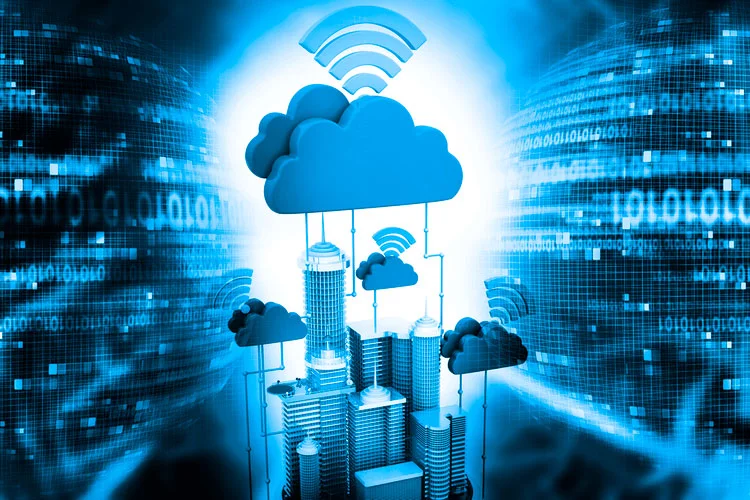
New necessities of the emerging technologies are the driving force behind IT development. The Internet of Things is a constantly growing business that requires more environment friendly ways to manage information transmission and processing. There are a number of types of fog computing, including client-based, server-based, and hybrid fog computing.
Cloud computing refers again to the on-demand delivery of IT services/resources over the internet. On-demand computing service over the internet is nothing but cloud computing. By using cloud computing customers can access the companies from wherever whenever they want.
Schedule a meeting with us here, and let Seaflux be your trusted companion in unlocking the potential of cloud innovation. Your journey to a more agile and scalable future starts fog computing vs cloud computing with us. The cloud targets a deep, long-term analysis as a end result of a sluggish response.
Fog Computing Structure
These providers allow users to upload crucial documents to the cloud and entry them from any device. The service providers guarantee knowledge safety whereas finish customers pay for cupboard space. Fog computing makes use of a person networking panel for knowledge processing as an alternative of utilizing centralized cloud platforms.

The healthcare business is always in need of applied sciences to detect and address emergencies in real-time. Fog computing permits wearables, blood glucose displays, and different health units to find out about crucial situations, like a stroke, prematurely. Using fog computing, you’ll be able to create a customized alarm system at your own home.
The bodily distance between the cloud infrastructure and end-users can introduce latency and potential bandwidth limitations. In many respects, fog and edge computing are, actually, complimentary. In these cases, fog structures will merely act as extensions of strategically positioned edge data facilities. Now that we’ve explored the definitions, advantages, and limitations of fog computing and cloud computing, let’s evaluate them in the context of IoT initiatives.
Grow your business, transform and implement technologies based on artificial intelligence. https://www.globalcloudteam.com/ has a staff of experienced AI engineers.